

ERI SILK ไหมอีรี่
Soft & Warm นุ่มและอบอุ่น

OUR MATERIAL STORY เรื่องราวของวัสดุธรรมชาติ
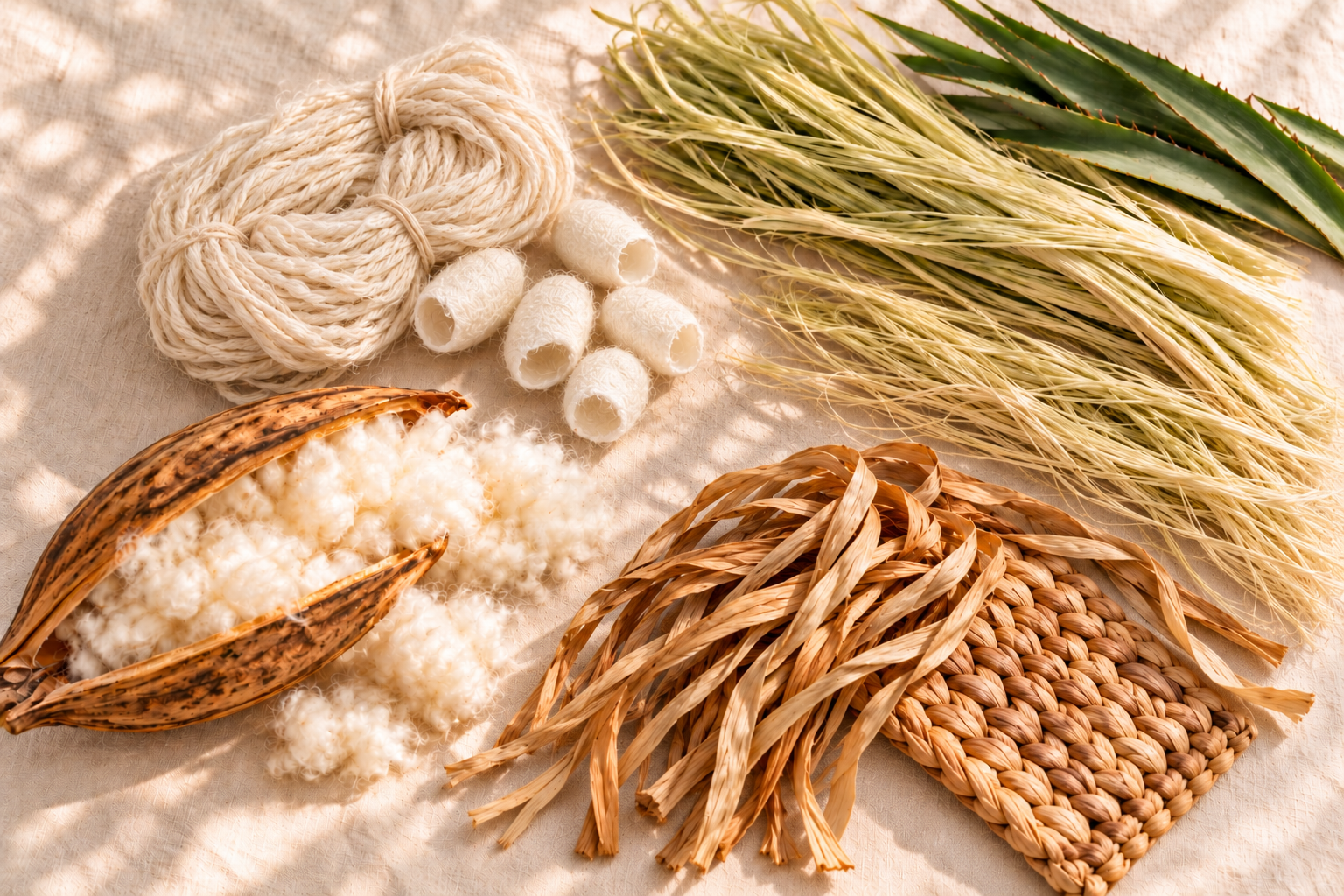
Every natural fibre carries a character shaped by its origin. เส้นใยธรรมชาติแต่ละชนิดมีเอกลักษณ์ที่ก่อเกิดจากแหล่งกำเนิด
From the gentle warmth of eri silk to the distinctive textures of pineapple, kapok and water hyacinth, Green Care explores the qualities of each material and thoughtfully transforms them into contemporary textiles. จากความอบอุ่นนุ่มนวลของไหมอีรี่ ไปจนถึงพื้นผิว ที่โดดเด่นของเส้นใยสับปะรด นุ่น และผักตบชวา Green Care คัดสรรคุณสมบัติของวัสดุแต่ละชนิด และนำมาพัฒนาอย่างใส่ใจให้กลายเป็นสิ่งทอร่วมสมัย
Soft & Warm นุ่มและอบอุ่น
Light & Strong เบาและแข็งแรง
Airy & Lightweight เบาและโปร่งสบาย
Distinctive Texture พื้นผิวเป็นเอกลักษณ์
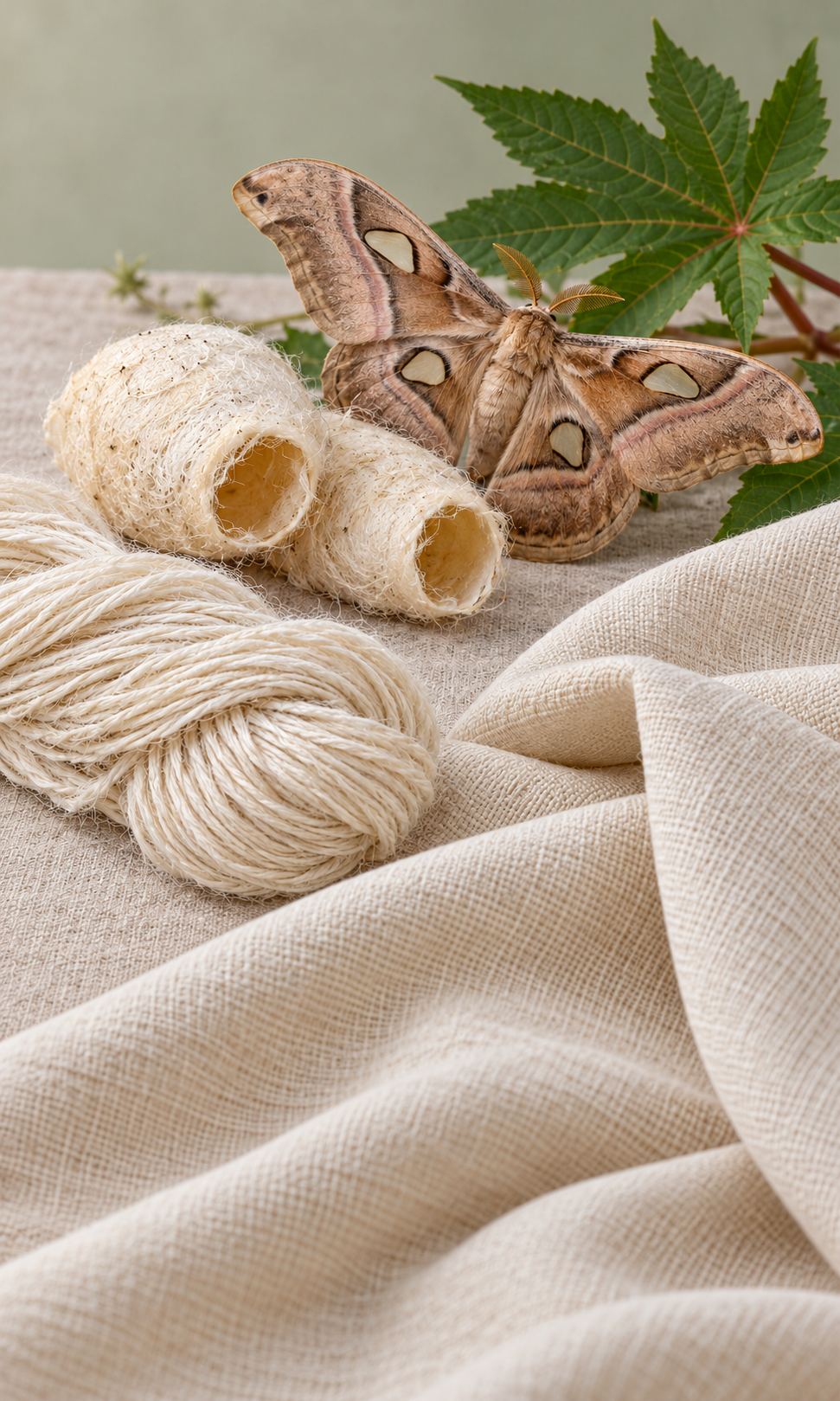
OPEN-ENDED COCOON · SPUN ERI SILK รังไหมปลายเปิด · เส้นไหมอีรี่แบบปั่น
01 / ERI SILK 01 / ไหมอีรี่
Our selected Eri silk begins with respect for the complete life cycle. Its open-ended cocoons are collected after the moth has naturally emerged, allowing the journey from larva to pupa and finally to moth to continue without being interrupted inside the cocoon. ไหมอีรี่ที่เราเลือกใช้เริ่มต้นจากการเคารพวงจรชีวิต อย่างครบถ้วน รังไหมปลายเปิดจะถูกเก็บหลังจากผีเสื้อไหม ออกจากรังตามธรรมชาติแล้ว ช่วยให้วงจรชีวิตตั้งแต่ตัวหนอน ดักแด้ จนเติบโตเป็นผีเสื้อไหม สามารถดำเนินต่อไปได้ โดยไม่ถูกหยุดลงภายในรัง
WHY IT CAN BE A MORE RESPONSIBLE CHOICE เหตุใดไหมอีรี่จึงเป็นทางเลือกที่มีความรับผิดชอบมากขึ้นได้
The moth is allowed to emerge naturally before the cocoon is processed, so the pupa does not need to be killed to preserve a continuous silk filament. ผีเสื้อไหมจะออกจากรังตามธรรมชาติก่อนนำรังไป แปรรูป จึงไม่จำเป็นต้องฆ่าดักแด้เพื่อรักษา เส้นไหมยาวต่อเนื่อง
After emergence, the discontinuous fibres are prepared and spun into yarn rather than reeled as one long filament, creating Eri silk’s soft, matte character. หลังผีเสื้อออกจากรัง เส้นใยที่ไม่ต่อเนื่องจะถูก เตรียมและปั่นเป็นเส้นด้ายแทนการสาวเป็นเส้นยาว จึงเกิดผิวสัมผัสนุ่ม ด้าน และเป็นเอกลักษณ์ ของไหมอีรี่
Eri silkworms feed mainly on castor leaves, connecting fibre production with an established, multi-purpose agricultural crop. หนอนไหมอีรี่กินใบละหุ่งเป็นอาหารหลัก ทำให้การผลิต เส้นใยสามารถเชื่อมโยงกับพืชเกษตรที่นำส่วนอื่น ไปใช้ประโยชน์ได้ด้วย
Rearing, preparing and spinning Eri fibre can support skilled work and additional income for growers, spinners and community enterprises. การเลี้ยงไหม การเตรียมเส้นใย และการปั่นด้าย สามารถสร้างงานฝีมือและรายได้เสริมให้เกษตรกร ผู้ปั่นด้าย และวิสาหกิจชุมชน
Responsible impact also depends on farming, degumming, dyeing, energy use, wastewater management and traceability throughout the supply chain. ผลลัพธ์ด้านความรับผิดชอบยังขึ้นอยู่กับการเพาะเลี้ยง การลอกกาว การย้อม การใช้พลังงาน การจัดการน้ำเสีย และการตรวจสอบย้อนกลับตลอดห่วงโซ่อุปทาน
02 / PINEAPPLE LEAF FIBRE 02 / เส้นใยใบสับปะรด
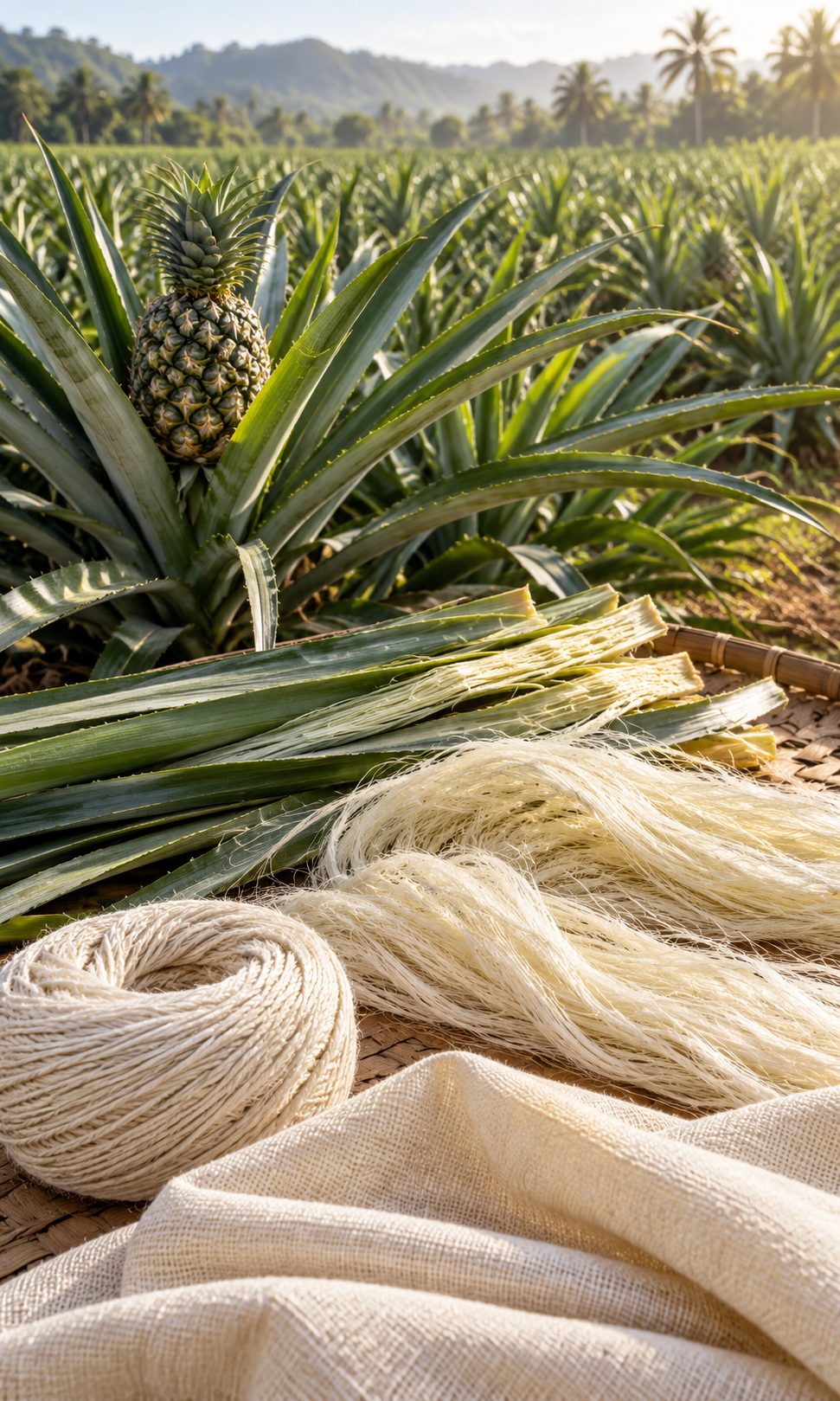
Thailand’s widespread pineapple cultivation leaves behind long, fibrous leaves after the fruit is harvested. Rather than treating them only as agricultural residue, the leaves can be processed to recover natural fibres for yarn and textile development.
ประเทศไทยมีการปลูกสับปะรดอย่างแพร่หลาย หลังจากเก็บเกี่ยวผลแล้ว ยังมีใบยาวที่อุดมด้วยเส้นใย เหลืออยู่ในพื้นที่เพาะปลูก แทนที่จะมองใบเหล่านี้ เป็นเพียงวัสดุเหลือทางการเกษตร เราสามารถนำมา แยกเส้นใยและพัฒนาต่อเป็นเส้นด้ายและวัสดุสิ่งทอได้
Recovering useful fibre from leaves remaining after the pineapple harvest. นำใบที่เหลือหลังการเก็บเกี่ยวผลสับปะรด กลับมาใช้เป็นแหล่งของเส้นใย
Creating another valuable use from an existing food crop. เพิ่มการใช้ประโยชน์จากพืชชนิดเดิม นอกเหนือจากการเก็บเกี่ยวผล
Connecting Thailand’s agricultural resources with new textile possibilities. เชื่อมโยงทรัพยากรทางการเกษตรของไทย เข้ากับโอกาสใหม่ในงานสิ่งทอ
Developing the fibre with attention to processing, resource use and material quality. ให้ความสำคัญกับกระบวนการผลิต การใช้ทรัพยากร และคุณภาพของวัสดุ
03 / KAPOK
Kapok has long been a familiar natural fibre in Thai everyday life. For generations, its soft and lightweight character was known through traditional pillows and bedding. Today, Green Care brings this familiar fibre into a new textile perspective—developing it into contemporary fabrics and garments. นุ่นเป็นเส้นใยธรรมชาติที่อยู่คู่กับวิถีชีวิตของคนไทยมาอย่างยาวนาน หลายคนคุ้นเคยกับสัมผัสที่เบาและนุ่มฟูจากหมอนและเครื่องนอนในอดีต วันนี้ Green Care นำเส้นใยที่คุ้นเคยนี้กลับมาศึกษาและพัฒนาในมุมมองใหม่ เพื่อสร้างสรรค์เป็นผ้าและเสื้อผ้าร่วมสมัย
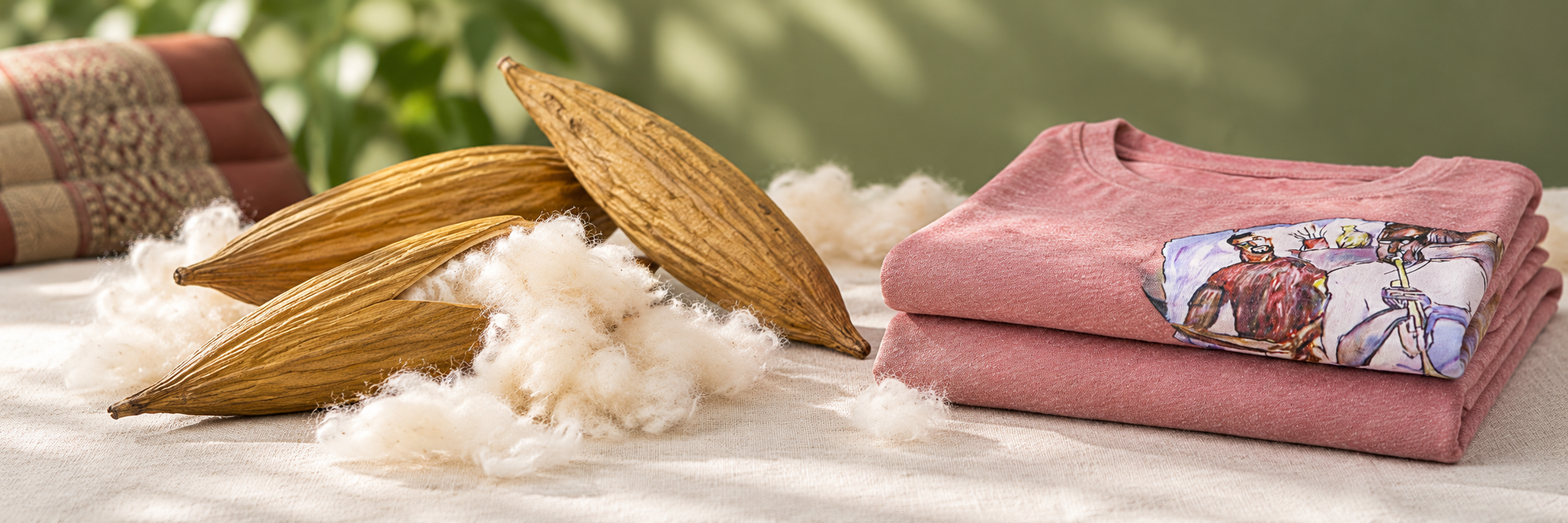
Kapok was traditionally valued for its soft, airy character in pillows and household textiles. This familiar use has given the fibre a lasting place in Thailand's shared material memory. ในอดีตคนไทยคุ้นเคยกับความเบาและนุ่มฟูของนุ่นจากหมอนและสิ่งทอภายในบ้าน การใช้งานที่เรียบง่ายนี้ทำให้นุ่นกลายเป็นวัสดุธรรมชาติที่อยู่ในความทรงจำร่วมของผู้คนหลายรุ่น
Green Care studies the fibre's distinctive character and applies appropriate material preparation and textile processes to develop this familiar natural resource into contemporary fabrics and garments. Green Care ศึกษาลักษณะเฉพาะของเส้นใยนุ่นและเลือกใช้กระบวนการเตรียมวัสดุและการผลิตสิ่งทอที่เหมาะสม เพื่อนำทรัพยากรธรรมชาติที่คุ้นเคยมาพัฒนาเป็นผ้าและเสื้อผ้าร่วมสมัย
Kapok fibre is gathered from mature pods without cutting down the tree. เก็บเส้นใยจากฝักนุ่นที่โตเต็มที่ โดยไม่จำเป็นต้องตัดต้นนุ่น
A large hollow structure gives the fibre its naturally airy and lightweight character. โครงสร้างที่มีช่องว่างภายในขนาดใหญ่ช่วยให้เส้นใยมีลักษณะเบาและโปร่งโดยธรรมชาติ
Thoughtfully developed through suitable textile processes for contemporary fabrics and garments. พัฒนาด้วยกระบวนการสิ่งทอที่เหมาะสม เพื่อสร้างสรรค์เป็นผ้าและเสื้อผ้าร่วมสมัย
WATER HYACINTH FIBRE เส้นใยผักตบชวา
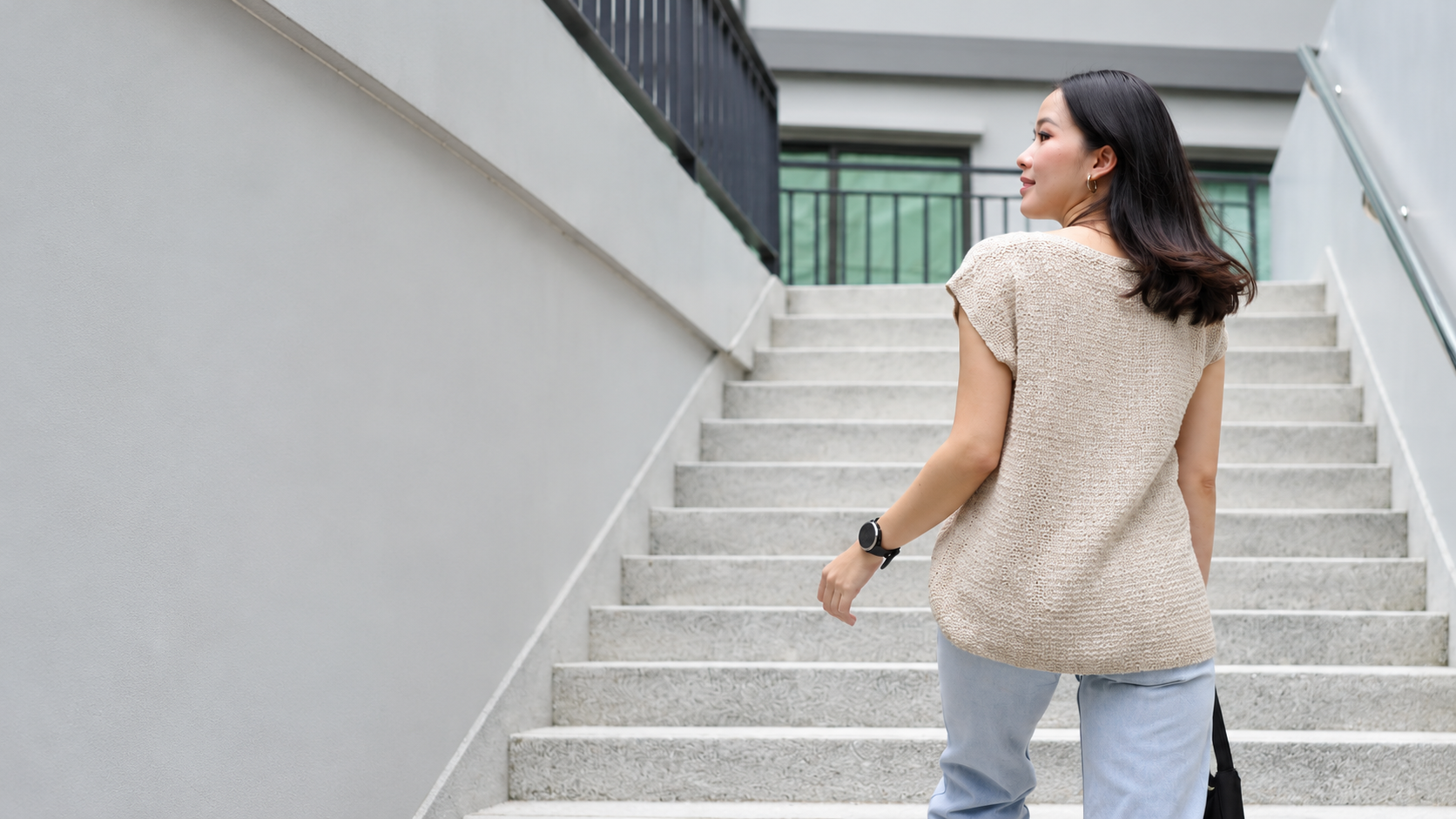
Water hyacinth is a familiar sight in Thailand's waterways. At Green Care, we look beyond the problem—exploring how an overlooked plant can begin a new textile story. ผักตบชวาเป็นพืชที่เราคุ้นเคยในแหล่งน้ำของประเทศไทย สำหรับ Green Care เราเลือกมองให้ไกลกว่าปัญหา และค้นหาว่าพืชที่เคยถูกมองข้ามจะกลายเป็นจุดเริ่มต้น ของเรื่องราวสิ่งทอบทใหม่ได้อย่างไร
AN OVERLOOKED RESOURCE ทรัพยากรที่เคยถูกมองข้าม
When water hyacinth spreads densely across the water's surface, it can obstruct water flow and affect aquatic environments. Yet within this fast-growing plant is a natural material waiting to be explored. เมื่อผักตบชวาแพร่กระจายอย่างหนาแน่นบนผิวน้ำ พืชชนิดนี้อาจกีดขวางทางน้ำและส่งผลต่อ สภาพแวดล้อมในแหล่งน้ำ แต่ภายในพืชที่เติบโต อย่างรวดเร็วนี้ ยังมีวัสดุธรรมชาติที่รอการค้นพบ และพัฒนา
Green Care explores fibre derived from water hyacinth through textile development—giving an overlooked material a new purpose that can be seen, touched, and worn. Green Care นำเส้นใยที่ได้จากผักตบชวามาศึกษา และพัฒนาในงานสิ่งทอ เพื่อสร้างบทบาทใหม่ให้วัสดุ ที่เคยถูกมองข้าม กลายเป็นสิ่งที่สามารถมองเห็น สัมผัส และสวมใส่ได้จริง
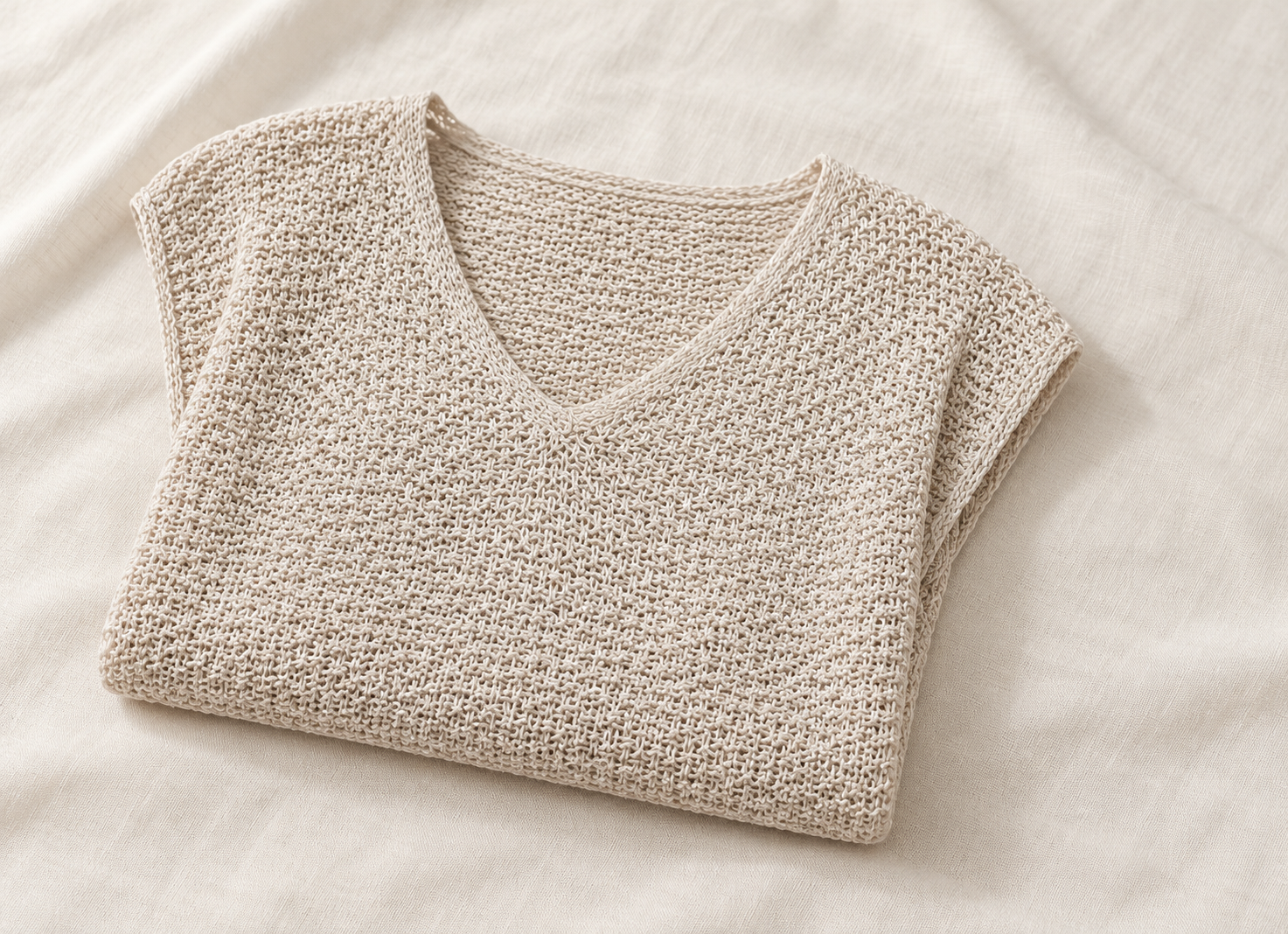
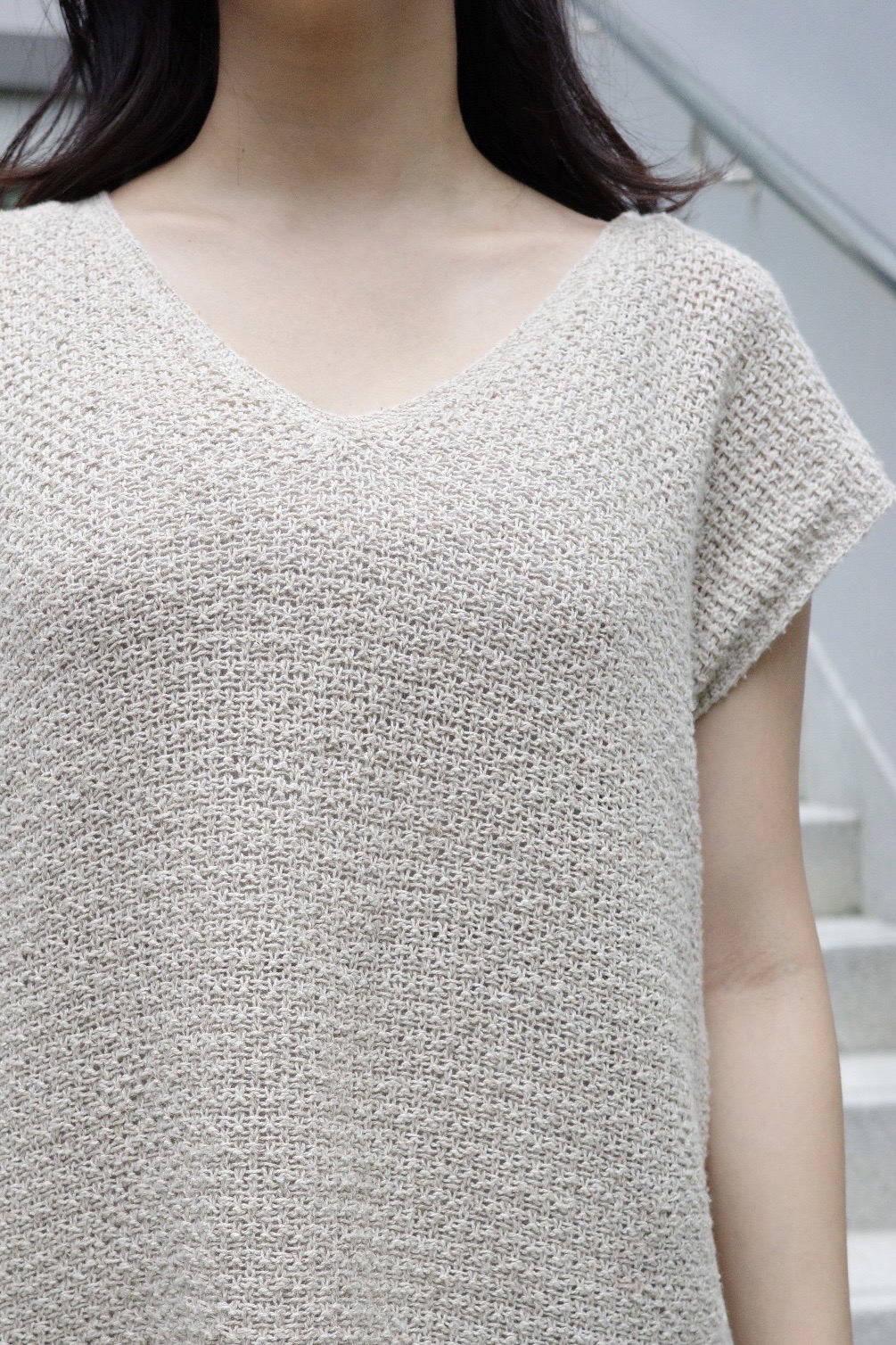
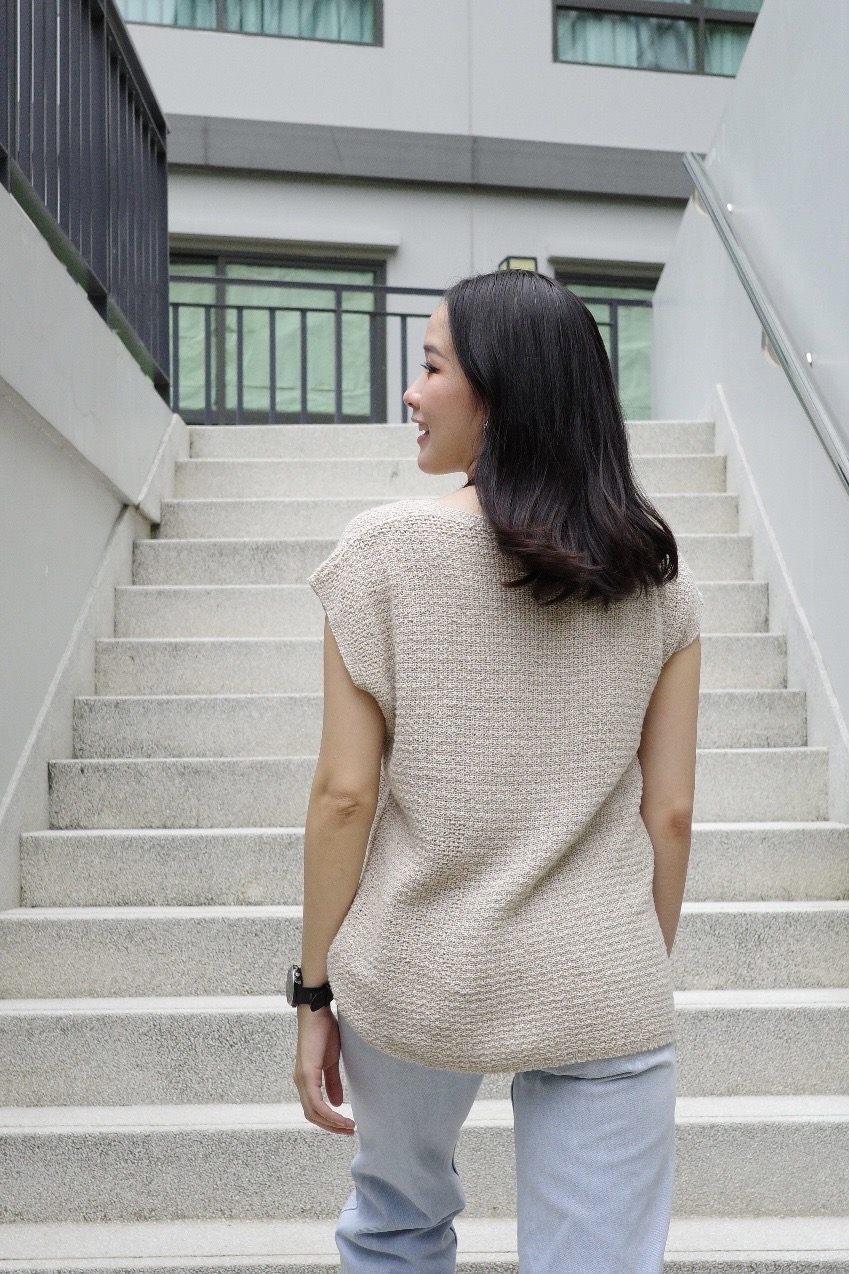
What is often removed and overlooked can become the beginning of a new material story. สิ่งที่มักถูกเก็บออกและมองข้าม สามารถกลายเป็นจุดเริ่มต้นของเรื่องราว วัสดุรูปแบบใหม่
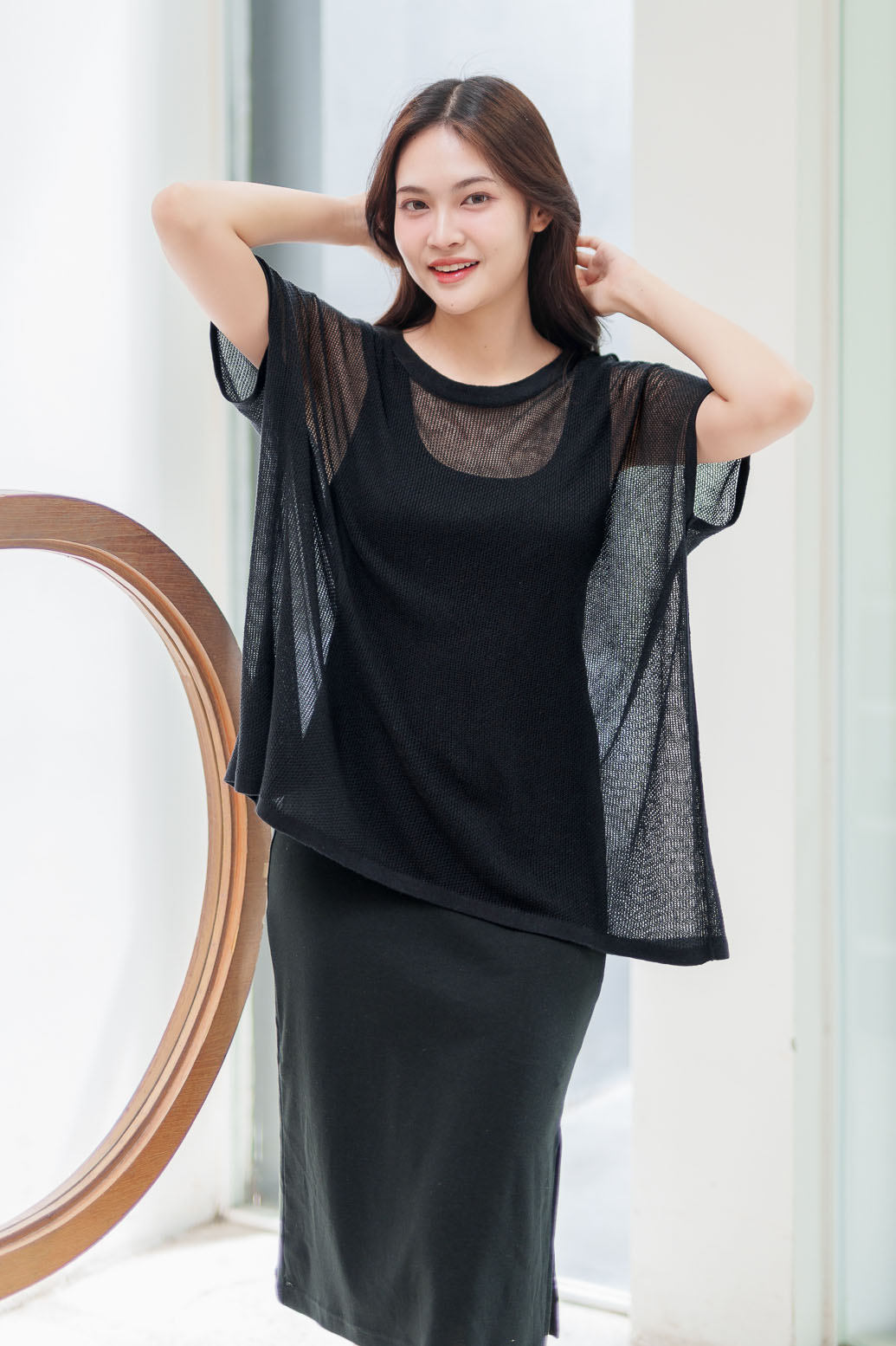
Its fibre is explored for use in yarn, knitted structures, and wearable textile applications. เส้นใยถูกนำมาศึกษาเพื่อค้นหาความเป็นไปได้ ในการใช้กับเส้นด้าย โครงสร้างผ้าถัก และผลิตภัณฑ์ที่สวมใส่ได้
A real knitted garment demonstrates how an overlooked plant can find a place in contemporary textiles. เสื้อผ้าที่ผลิตขึ้นจริงแสดงให้เห็นว่า พืชที่เคยถูกมองข้ามสามารถมีบทบาทใหม่ ในงานสิ่งทอร่วมสมัยได้
From a plant floating on the water to a garment designed to be worn, this project reflects our belief that sustainable textiles begin with seeing new possibilities in the materials already around us. จากพืชที่ลอยอยู่บนผิวน้ำ สู่เสื้อผ้าที่สามารถสวมใส่ได้จริง ผลงานนี้สะท้อนแนวคิดของเราว่า สิ่งทอที่ยั่งยืนสามารถเริ่มต้นได้จากการมองเห็นคุณค่า และความเป็นไปได้ใหม่ในวัสดุที่อยู่รอบตัวเรา